

Financial Services
Financial Management ERP
Transform Financial Operations with Intelligent Financial Management ERP Software
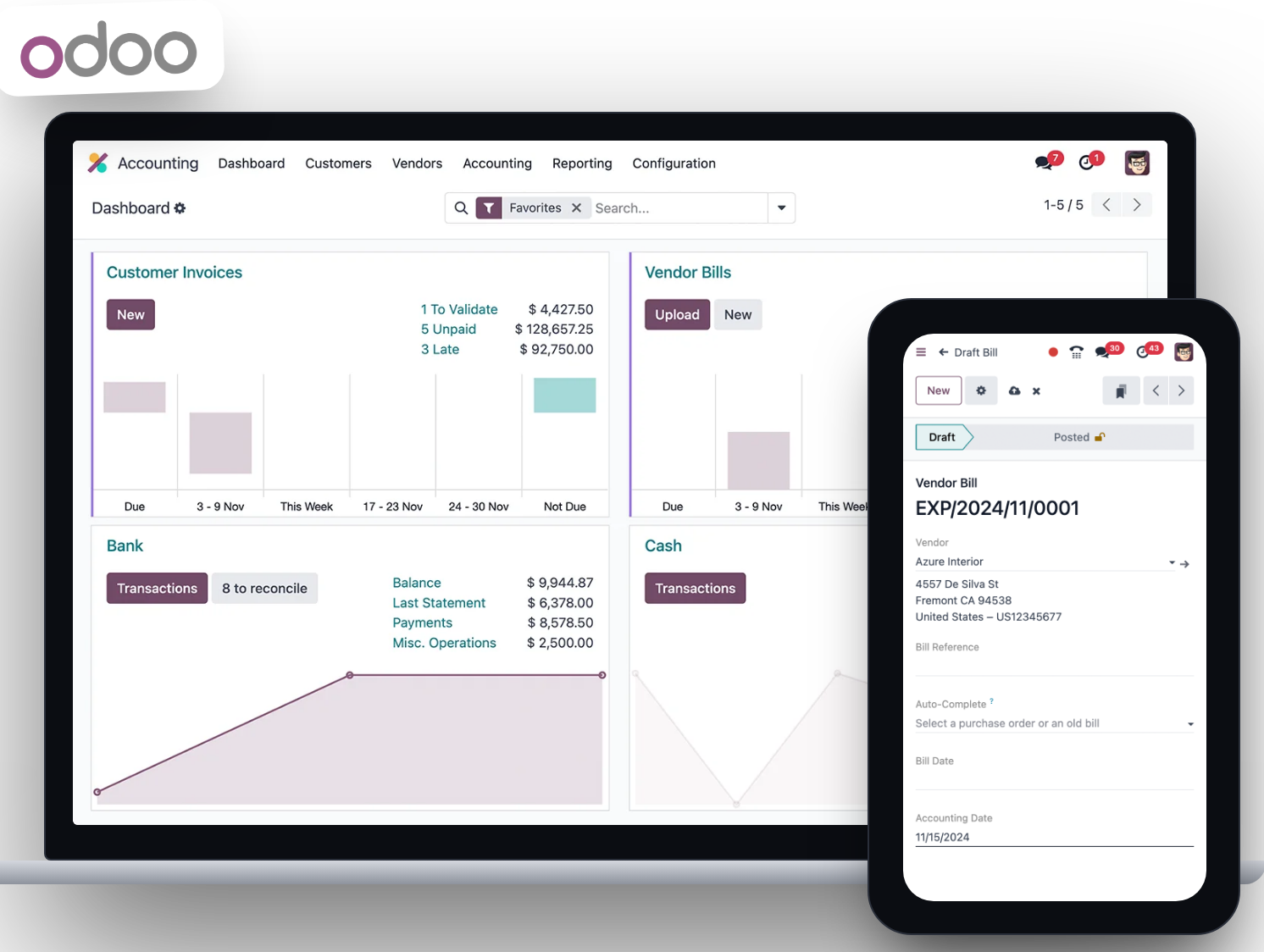
From accounting and invoicing to reporting and compliance, manage your financial operations through one intelligent, connected ERP platform.
Financial services require connected processes, accurate data, and streamlined operations. We deliver scalable solutions built around your requirements, helping you implement the best ERP for financial services to improve visibility, simplify workflows, and support sustainable business growth.

Challenges
Is Your Financial Management Still Too Complicated?
Financial data spread across different systems
Managing and maintaining accurate financial information across disconnected systems creates data silos. A centralised financial system gives better control and visibility.
Manual accounting and data entry
Repetitive data entry and manual accounting tasks are time-consuming and have an increased risk of manual errors. Automation streamlines routine financial processes and improves accuracy.
Delayed financial reports
Manual data collection and reconciliation complicate creating timely insights. Real-time reporting helps businesses monitor financial performance and make faster decisions.
Difficulty tracking receivables and payables
Poor visibility into outstanding receivables and payables affects cash flow and payment planning. Centralised tracking helps in monitoring dues, payments, and obligations more efficiently.
Limited visibility into cash flow
Lack of updated cash flow information makes it difficult to understand the current financial position. Integrated financial management provides clearer visibility into incoming and outgoing funds.
Errors caused by repetitive processes
Repeated manual calculations, data transfers, and reconciliations cause inconsistencies and costly mistakes. Automated workflows help reduce errors and maintain more reliable financial records.
Challenges managing multiple branches or companies
Managing finances across multiple branches or legal entities makes consolidation and reporting complicated. A unified system manages transactions and financial information across entities more effectively.
Poor coordination between finance and other departments
When finance operates on separate systems from sales, purchasing, inventory, and other departments, important information can become fragmented. Integrated systems improve data sharing and coordination across business functions.
About Our Solution
One ERP Platform for Complete Financial Management
A financial management ERP software connects accounting and financial operations with sales, purchasing, inventory, CRM, and other core business functions through one unified platform. It maintains accurate financial data, streamlines transactions, improves visibility, and makes informed decisions using connected business information.
Commerce9 helps businesses implement and configure ERP systems around their specific financial workflows, ensuring seamless integration, efficient processes, and scalable financial management.

Features
Everything You Need to Manage Business Finances
General Ledger Management
Maintains a centralised record of all financial transactions across your business, tracks journal entries, account balances, and financial activities for better accuracy, and gives you a clear view of your overall financial position.
Accounts Payable
Manages supplier invoices, payments, and outstanding obligations from one platform, tracks payment due dates, maintains accurate vendor records, improves control over outgoing cash, and avoids missed payments.
Accounts Receivable
Tracks customer invoices, outstanding balances, and incoming payments efficiently, monitors receivables and payment status in real time, improves collection processes, and maintains healthier cash flow.
Invoicing & Billing
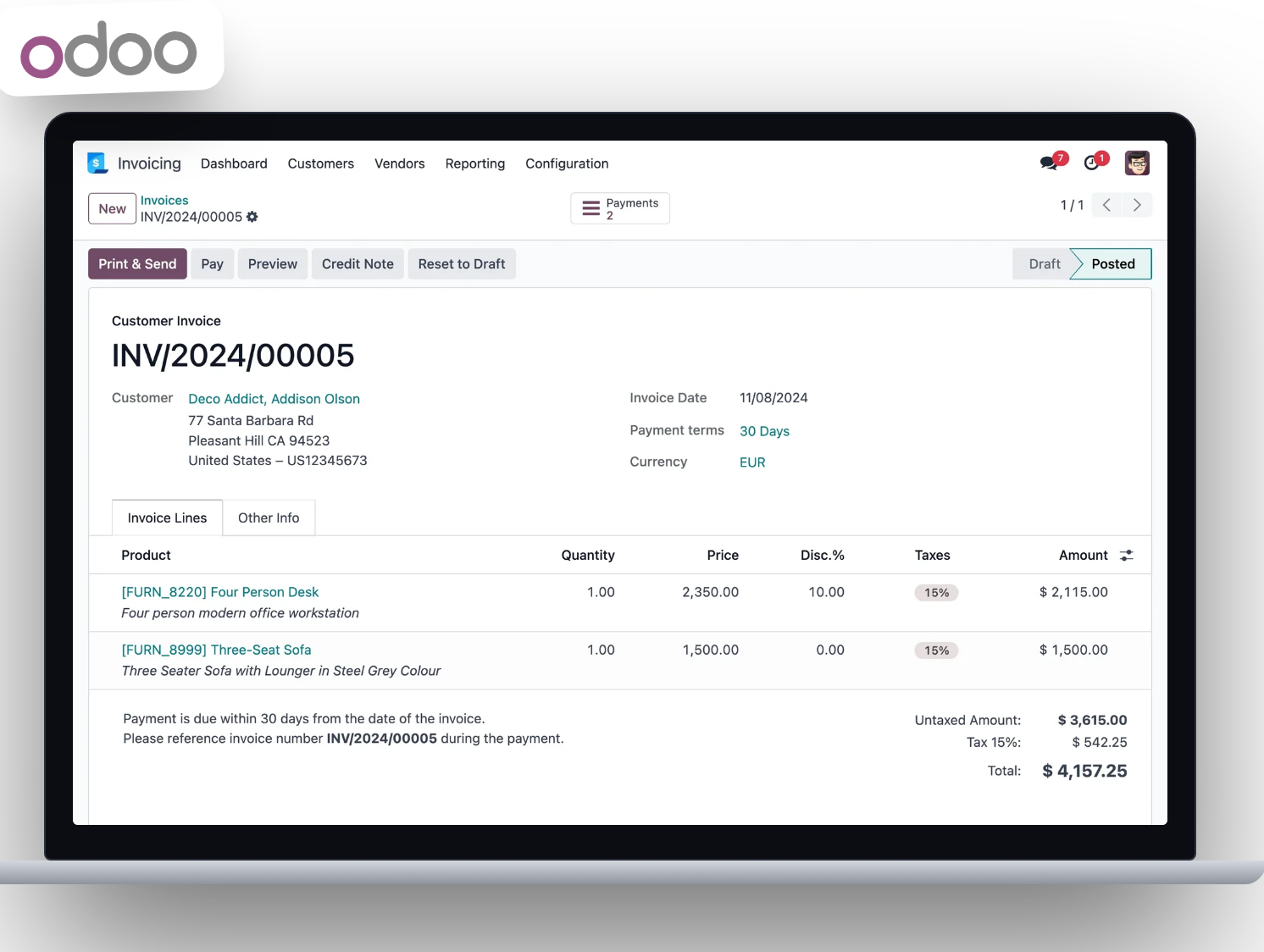
Creates, sends, and manages accurate invoices through streamlined billing workflows, automates recurring billing and payment-related processes where required, and reduces manual effort while improving billing accuracy and consistency.
Expense Management
Records, categorises, and monitors business expenses through a centralised system, simplifies expense submissions and approvals, tracks expenses across departments, and gains better visibility into spending and control of unnecessary costs.
Cash Flow Management
Monitors cash inflows and outflows to understand your business liquidity, tracks expected receipts and payments to support better financial planning, and makes informed decisions based on current and projected cash positions.
Bank Reconciliation
Matches bank transactions with recorded financial entries efficiently, identifies discrepancies, missing transactions, or unmatched payments with greater ease, and maintains accurate financial records while reducing manual reconciliation work.
Tax Management
Manages tax-related transactions, maintains organised financial records for reporting, configures tax rules according to applicable business requirements, simplifies tax calculations, and improves compliance-focused financial processes.
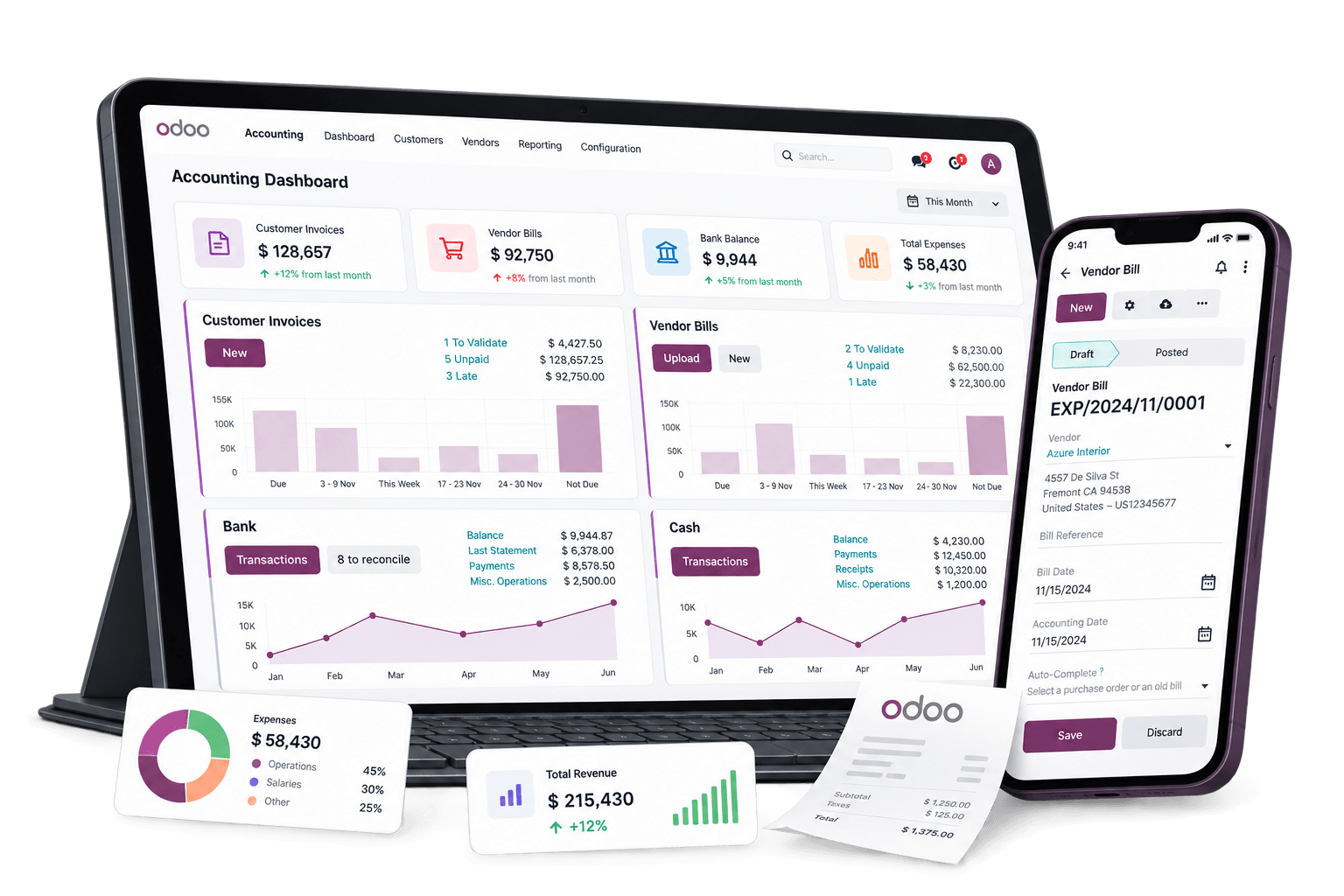
Know Where Your Business Stands Financially

Real-time financial data
Get access to up-to-date financial information across your business from a centralised system. Track transactions, balances, and financial activities without relying on outdated records.
Updated dashboards
Get a clear overview of your financial position through regularly updated dashboards. Monitor key financial metrics and identify important changes at a glance.
Income and expense visibility
Track business income and expenses with greater clarity and accuracy. Understand where your money comes from and where it goes.
Cash flow tracking
Monitor cash inflows and outflows to maintain better control over your working capital. Gain visibility into available funds and upcoming cash requirements.
Outstanding payment monitoring
Keep track of pending customer payments, overdue invoices, and outstanding receivables. Timely visibility helps businesses follow up efficiently and maintain healthier cash flow.
Financial performance reports
Generate detailed reports to evaluate revenue, expenses, profitability, and overall financial performance. Use these insights to make informed business and financial decisions.
Reduce Manual Finance Work With Automation
Recurring invoices
Automates the creation and scheduling of recurring invoices for subscriptions and repeat customers to reduce repetitive data entry and generate invoices accurately and on time.
Payment reminders
Automatically sends payment reminders based on invoice due dates and predefined schedules to reduce manual follow-ups and maintain timely collections.
Expense tracking
Automates expense recording and categorisation to reduce manual data entry, submit expenses efficiently, and maintain accurate and organised records.
Bank reconciliation
Automatically matches bank transactions with corresponding invoices, payments, and accounting entries to speed up reconciliation and reduce errors caused by manual matching.
Invoice processing
Streamlines invoice creation, recording, validation, and processing through automated workflows to minimise repetitive administrative tasks and improve accuracy across financial records.
Financial reporting
Generates financial reports using automatically updated accounting data. Gives finance teams access to accurate, timely insights without spending hours compiling information manually.
Approval workflows
Automates approval processes for expenses, invoices, purchases, and other financial transactions and predefines workflows to route requests to the right people, reducing delays and ensuring consistent oversight.
Turn Financial Data Into Business Insights
Profit & Loss Report
They give you a clear view of your business revenue, expenses, and profitability over a selected period to identify financial trends and understand where your business is gaining or losing value.
Balance Sheet
They help you monitor your assets, liabilities, and equity through accurate balance sheet reports for a clear picture of your organisation’s overall financial position.
Cash Flow Statement
Track cash inflows and outflows with the statements to understand cash flow, improve cash management, and plan upcoming financial requirements.
Accounts Receivable Report
Monitors outstanding customer invoices, payment statuses, and overdue amounts in one place to improve collections and maintain better control over incoming cash.
Accounts Payable Report
Tracks supplier invoices, outstanding payments, and upcoming financial obligations for better visibility into payables and to manage payment schedules more effectively.
Budget vs Actual Report
Compares planned budgets with actual financial performance to identify variances, control spending, and make informed financial adjustments.
Financial Dashboard
Gives access to key financial metrics through intuitive, real-time dashboards to monitor revenue, expenses, cash flow, profitability, and other important indicators at a glance.
Custom Report
Creates reports based on your specific financial requirements and business objectives to analyse relevant data in greater detail and generate insights to support strategic decision-making.
Connect Finance With Your Entire Business
Sales
Connect sales transactions directly with financial management to streamline invoicing and payment tracking and access accurate sales data without repeated manual entries.
Finance
Centralise core financial activities, including accounting, invoicing, payments, and financial records for greater control and a consistent view of business performance.
Inventory
Link inventory movements with financial data to track stock value, costs, and related transactions accurately to maintain up-to-date records and improve cost visibility.
Purchasing
Connect purchase orders, supplier invoices, and payments within the same system to reduce duplicate data entry and provide better visibility into procurement costs and outstanding obligations.
CRM
Integrate customer and sales information with financial data to give teams a complete view of customer transactions for accurate invoicing, payment tracking, and customer-level financial insights.
HR
Connect employee information, payroll, expenses, and other HR-related financial data with the finance function to simplify payroll processing and reduce the need to maintain duplicate records.
Reporting
Bring data from across business functions into unified financial and operational reports for a comprehensive view of performance and make informed decisions.
Built Around the Way Your Business Operates
Trading & Distribution
Manage purchasing, sales, inventory, warehousing, and distribution through one integrated platform. Get better visibility into stock, orders, margins, and day-to-day trading operations.
Retail & E-commerce
Connect online and offline sales, inventory, customer data, and order management in one system to streamline operations and deliver consistent experiences across every sales channel.
Manufacturing
Manage production planning, inventory, procurement, quality, maintenance, and shop-floor operations seamlessly, improve production visibility, automate workflows, and optimise resources across your manufacturing processes.
Professional Services
Manage projects, clients, timesheets, billing, resources, and internal operations from a centralised platform, improve team coordination, track project performance, and maintain greater control over service delivery.
Healthcare
Connect patient management, appointments, billing, inventory, and administrative processes through an integrated system, improve operational efficiency, and provide accurate information to teams.
Education
Streamline admissions, student management, academics, fees, HR, and administration through one connected platform. Simplify institutional workflows while improving data visibility and operational coordination.
Multi-Branch Businesses
Manage multiple locations, departments, inventory, sales, finance, and operations from a unified ERP environment and get centralised visibility while allowing individual branches to manage their day-to-day activities efficiently.
Why Choose Commerce9?
ERP implementation
We manage the complete ERP implementation process, from requirement analysis and system configuration to testing and deployment. We align the ERP with your business processes to support a smooth transition.
ERP customization
We customise ERP functionality to address your unique workflows, operational requirements, and industry-specific needs. Our solutions are designed to remain scalable and adaptable as your business grows.
Financial workflow configuration
We configure financial workflows to streamline accounting, invoicing, payments, approvals, and reporting. This helps improve financial accuracy, visibility, and process efficiency.
Third-party integrations
We integrate your ERP with eCommerce platforms, payment gateways, CRM systems, logistics tools, and other business applications. Seamless data exchange helps create a connected technology ecosystem.
Data migration
We securely migrate essential business data from legacy systems into your new ERP environment. Our migration includes data cleansing, mapping, validation, and structured migration for accuracy and integrity.
User training
We provide practical, role-based ERP training to help employees understand the system and its workflows for faster adoption and to enable users to work confidently with the new platform.
ERP support & maintenance
Our ongoing ERP support maintains system performance, resolves technical issues, and manages updates. We continuously monitor and optimise the system to support reliable business operations.
Business-specific reporting
We create customised reports and dashboards based on your business requirements and key performance indicators. Our team provides actionable insights into operations, finance, sales, and other critical areas for better decision-making.
Implementation Process
From Financial Challenges to a Connected ERP System
(ERP Financial Management Implementation Process)
Business & Finance Process Analysis
We assess your existing financial workflows, accounting processes, reporting requirements, and operational challenges to identify process gaps and define ERP requirements aligned with your business objectives.
ERP Planning & Configuration
We plan the ERP implementation based on your financial structure, workflows, user roles, and reporting needs. We configure the system to support efficient accounting, budgeting, invoicing, payments, and financial management.
Data Migration
We securely migrate essential financial and business data from your existing systems into the ERP. In our migration, we clean, map, validate, and transfer data to maintain accuracy and consistency.
Integration & Testing
We integrate the ERP with relevant banking, payment, accounting, and business systems for seamless data flow. Our comprehensive testing ensures financial processes, integrations, reports, and system performance work reliably before deployment.
Training & Go-Live Support
We provide practical, role-based training to help finance teams confidently adopt the new ERP system. Our go-live and post-implementation support ensures a smooth transition and helps resolve issues quickly.
Benefits:
Move Beyond Disconnected Financial Systems
Better financial visibility
Get a clear, real-time view of your financial performance across departments and business functions. Centralised financial information makes it easier to monitor revenue, expenses, balances, and overall performance.
Faster reporting
Generate financial reports faster without relying on manual data collection and spreadsheet consolidation. Access updated information to support quicker, more informed business decisions.
Reduced manual work
Automate repetitive financial tasks such as data entry, reconciliation, invoicing, and transaction processing, save time, and allow finance teams to focus on higher-value activities.
Improved data accuracy
Maintain consistent and reliable financial records through automated data capture and integrated workflows, and reduce duplicate entries, calculation errors, and inconsistencies across financial processes.

Better cash-flow monitoring
Track receivables, payables, expenses, and incoming payments from a centralised system for better visibility into cash flow and to plan their financial requirements more effectively.
Streamlined approvals
Simplify financial approval workflows for expenses, purchases, payments, and other transactions. Automated routing and clear approval processes help reduce delays and improve accountability.
Centralized financial data
Bring accounting records, invoices, payments, expenses, and other financial information together in one platform to improve collaboration and reduce information silos.
Easier business scaling
Support growing transaction volumes, new departments, locations, and business operations without adding unnecessary financial complexity. Scalable financial systems make it easier to adapt as your business expands.
Frequently Asked Questions
What is ERP financial management software?
Financial management ERP software centralises accounting, financial data, reporting, invoicing, and other finance processes in one integrated system.
How does ERP improve financial management?
Financial services ERP automates financial processes, improves data accuracy, provides real-time visibility, and enables faster financial reporting and decision-making.
Can ERP software automate accounting processes?
Yes. ERP financial management software can automate tasks such as invoicing, payments, reconciliations, expense management, and financial reporting.

Can financial ERP software manage multiple companies?
Yes. The best ERP for financial services can manage financial operations, transactions, and reporting for multiple companies from a centralised platform.


Can ERP financial management integrate with existing business systems?
Yes. Financial services ERP can integrate with CRM, inventory, sales, HR, banking, and other business applications for seamless data flow.
Can Commerce9 customize ERP financial management workflows?
Yes. Commerce9 can configure and customise ERP financial management software workflows based on your business processes, requirements, and operational needs.
Can ERP software support multi-currency accounting?
Yes. Financial management ERP software can support multiple currencies, exchange rates, transactions, and financial reporting across different markets.
Key Benefits
Why Choose Commerce9 Financial Management ERP?
Accurate and real-time financial data
Improved cash flow management
Reduced manual work and errors
Better control over receivables and payables
Faster and more accurate reporting
Seamless integration with other business functions
Scalable solution for multi-branch and multi-company operations
Improved compliance and tax management
Implementation Process
Our ERP Implementation Process
We follow a structured approach to ensure a smooth and successful implementation.
01
Business Requirement Analysis
02
ERP Configuration
03
Customisation
04
Data Migration
05
Integration
06
Testing
07
User Training
08
Go-Live & Support
Ready to Transform Your Financial Operations?
Let’s discuss how Commerce9 can help you implement the right financial management ERP solution for your business.
What Our Clients say.

Let’s warmly initiate our interaction!
Complete the form, and our experts will reach out to guide you in launching or enhancing your eCommerce business effectively.