

ERP Software for the Building Materials Industry

Simplify Material Trading, Inventory Management , Business Operations with ERP

Manage your building materials business with greater visibility and control through an integrated ERP solution from Commerce9. From purchasing and warehouse operations to sales, delivery, and financial management, bring your core business processes together on one platform.

Whether you supply cement, steel, tiles, timber, plumbing materials, electrical supplies, or other construction products, our ERP solutions help streamline daily operations, improve inventory accuracy, and support informed business decisions.

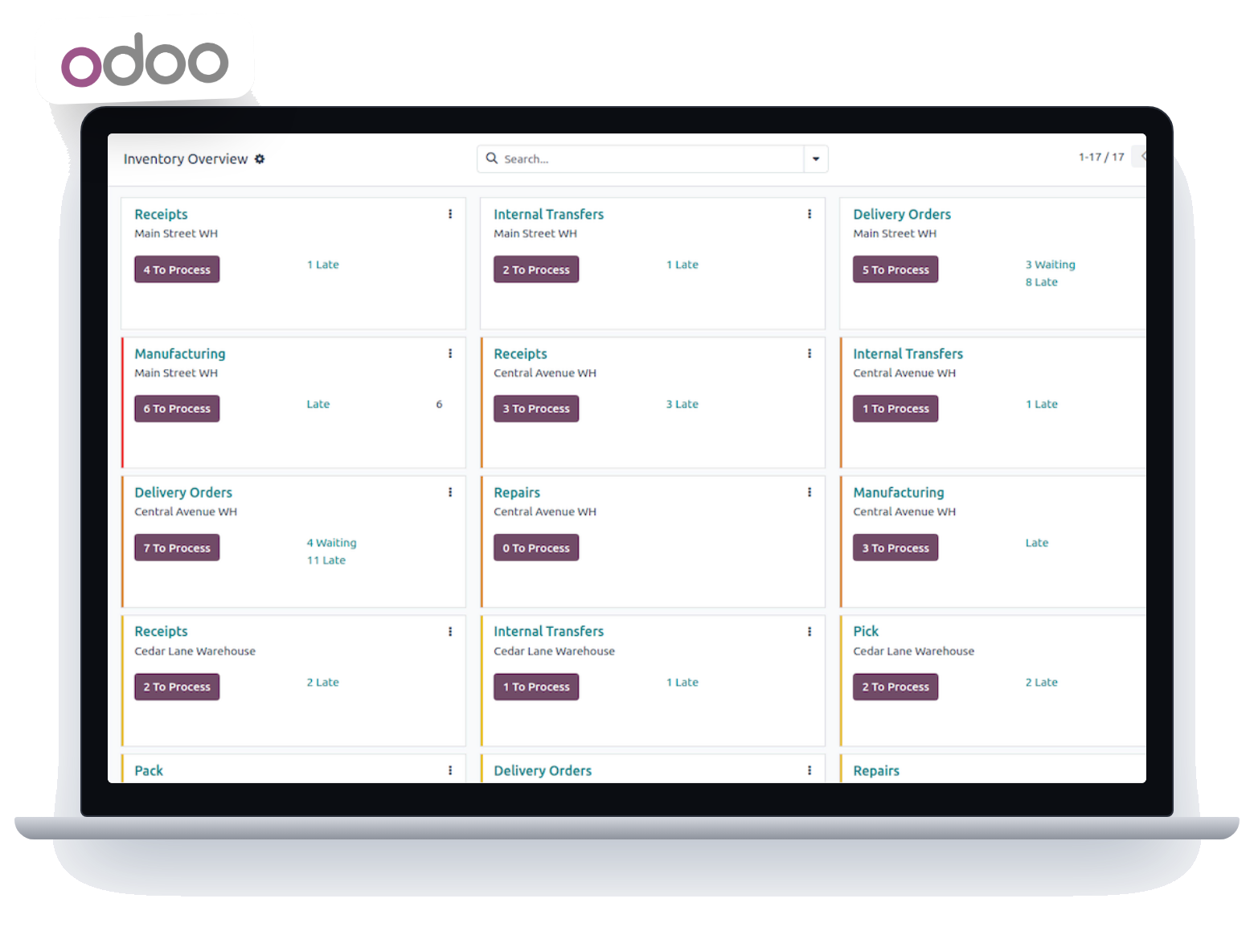
Odoo Inventory overview dashboard for a building materials warehouse on a laptop

One Connected ERP Solution for Your Building Materials Business

Building materials businesses manage a wide range of products, multiple suppliers, fluctuating prices, bulk orders, and time-sensitive deliveries. Handling these activities across separate systems can lead to stock discrepancies, purchasing delays, and limited visibility into business performance.

Commerce9 helps businesses connect essential operations through a unified ERP system. Access relevant business information, coordinate teams, and manage materials throughout the purchasing, storage, sales, and delivery lifecycle.

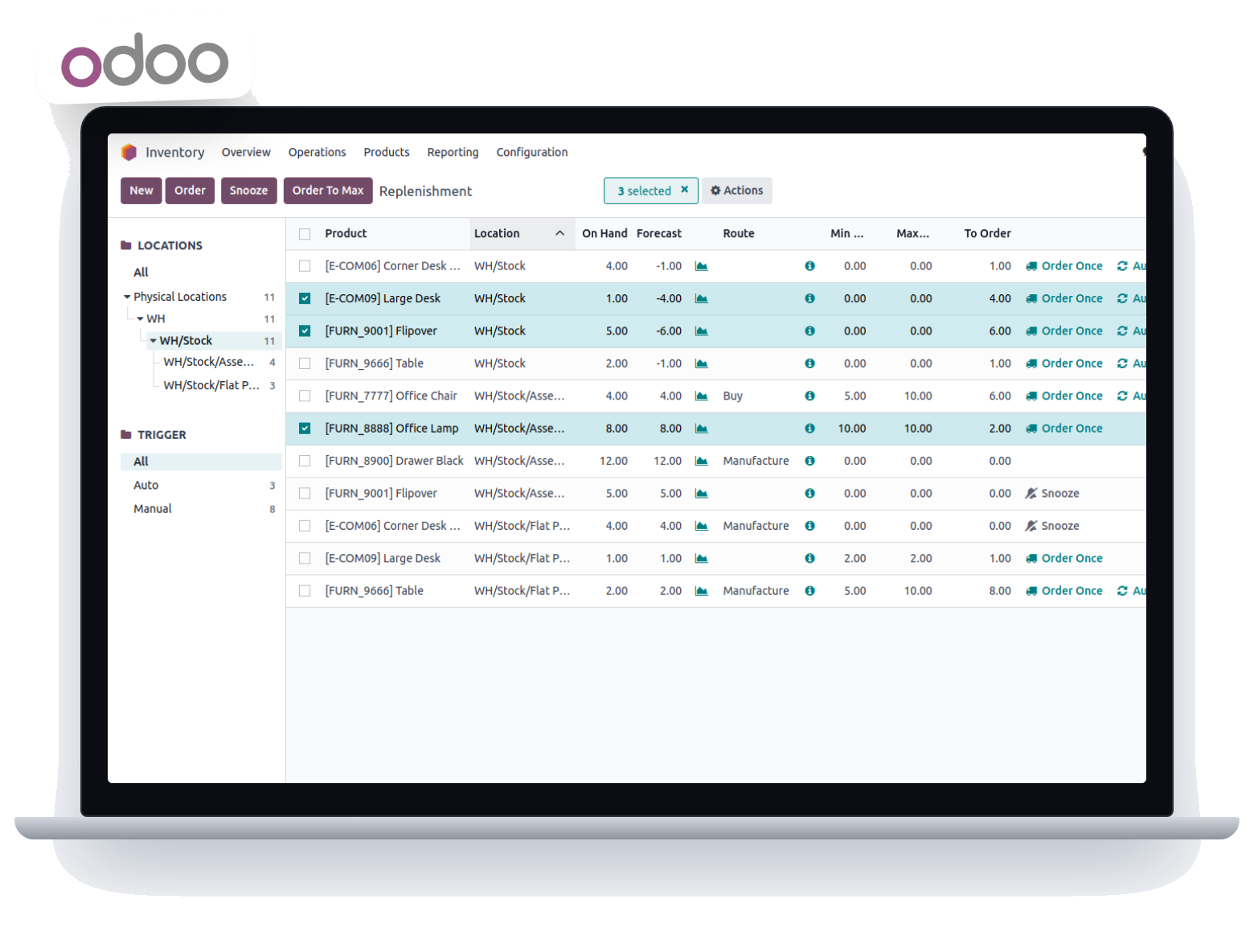
Odoo replenishment screen showing products to reorder for building materials stock

Key Benefits

Improved Inventory Visibility

Monitor stock availability and movements across warehouses and branches.

Better Purchasing Decisions

Track supplier quotations, purchase orders, pricing, and procurement requirements.

Streamlined Order Processing

Manage customer enquiries, quotations, sales orders, invoicing, and fulfilment.

Controlled Operating Costs

Gain better visibility into material costs, expenses, and business performance.

Coordinated Deliveries

Organize dispatch schedules and track the movement of materials to customers and project locations.

Data-Driven Management

Use consolidated reports to identify trends, monitor performance, and plan business growth.

Essential ERP Features for Building Materials Businesses

1. Inventory and Warehouse Management

Maintain accurate stock records for a diverse range of construction and building materials. Track material quantities, product variants, stock movements, and availability across multiple storage locations.

Key capabilities:

2. Procurement and Supplier Management

Manage supplier relationships and purchasing activities with a structured procurement workflow. Compare supplier prices, monitor purchase orders, and coordinate material replenishment based on business demand.

Key capabilities:

3. Sales and Order Management

Handle customer enquiries and orders efficiently, from the initial quotation to final delivery and invoicing. Maintain a clear overview of order status and coordinate sales activities with inventory and finance teams.

Key capabilities:

4. Financial Management and Accounting

Connect financial transactions with purchasing, sales, inventory, and other business activities. Improve visibility into cash flow, outstanding payments, expenses, and profitability.

Key capabilities:

5. Delivery and Distribution Management

Coordinate the dispatch of building materials to customers, contractors, and construction sites. Improve communication between sales, warehouse, and delivery teams to reduce fulfilment delays.

Key capabilities:

6. Multi-Branch and Multi-Warehouse Operations

Manage business activities across different branches, warehouses, and distribution locations through a consolidated operational view. Help teams coordinate stock availability and transfers while maintaining location-specific records.

Key capabilities:

7. Reporting and Business Intelligence

Turn operational data into useful information for planning and decision-making. Review sales performance, purchasing trends, stock movement, outstanding balances, and operating costs through relevant reports and dashboards.
Key capabilities:

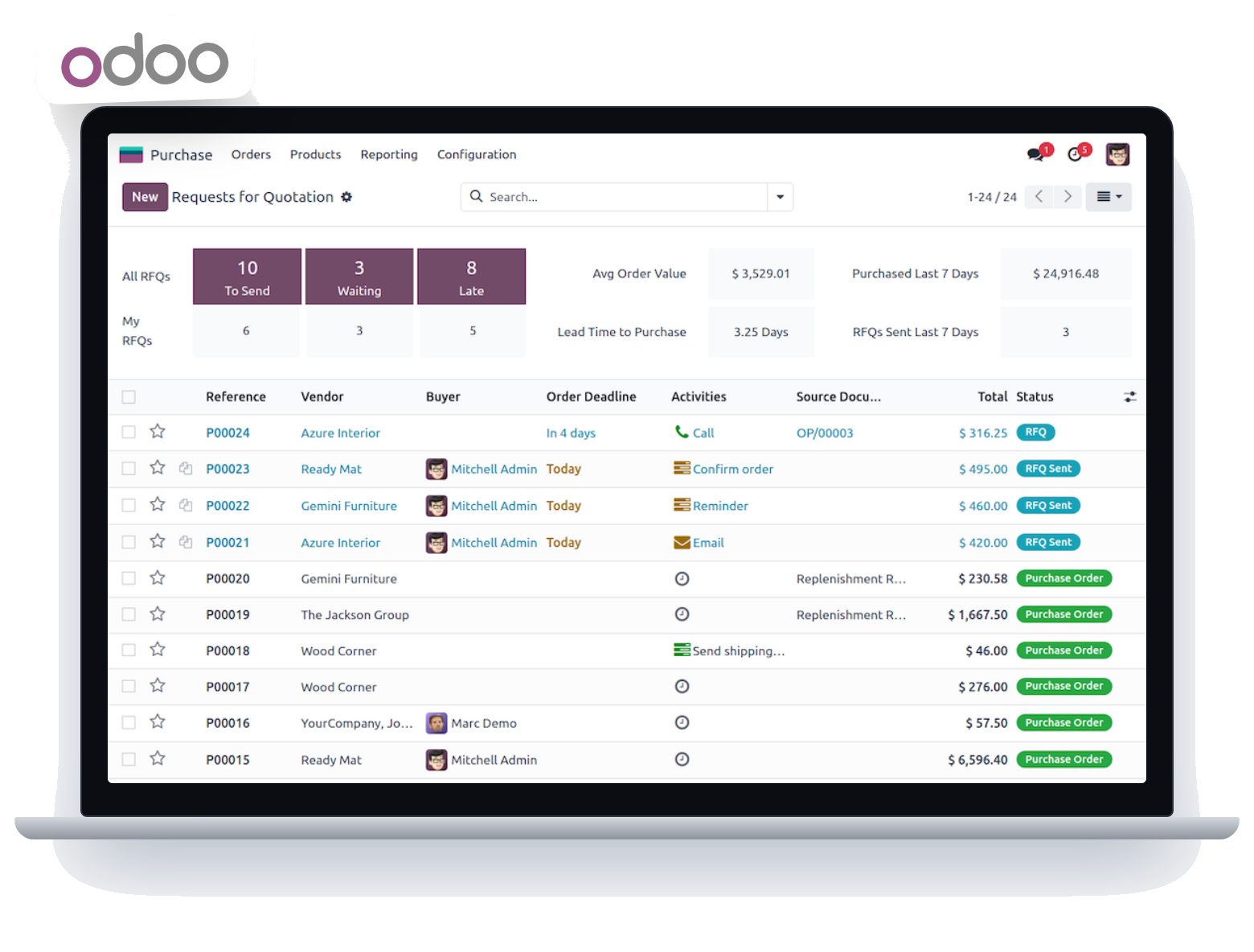
Odoo Purchase module showing requests for quotation and purchase orders
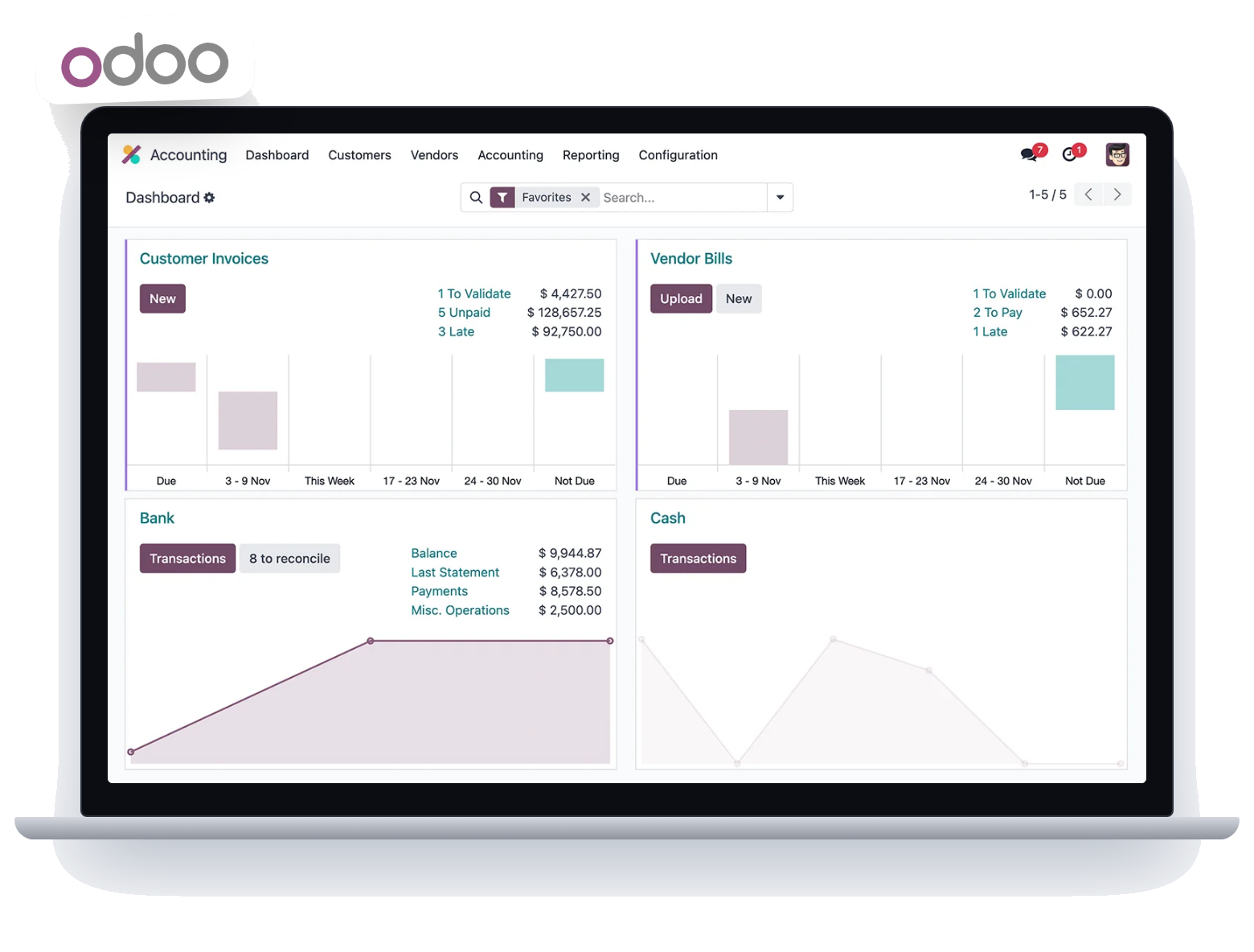
Odoo Accounting dashboard with customer invoices, vendor bills and bank overview

Built for Different Building Materials Business Models

Every building materials business has different operational requirements. An ERP solution can help organize workflows according to your products, supply chain, and business model.

Building Materials Manufacturers

Coordinate raw material availability, production planning, finished goods inventory, and order fulfilment. Where manufacturing functionality is included, connect production activities with procurement and sales.

Building Materials Traders and Wholesalers

Manage bulk purchases, supplier pricing, customer quotations, large order volumes, and stock distribution with improved operational visibility.

Construction Materials Distributors

Coordinate warehouse inventory, branch transfers, customer orders, dispatch schedules, and deliveries across distribution networks.

Building Materials Retailers

Manage product availability, sales transactions, customer accounts, purchasing, and financial records through connected business processes.

Project-Based Material Suppliers

Organize material requirements, purchase planning, deliveries, and cost tracking for customers and construction projects.

How ERP Helps Overcome Common Industry Challenges

Business challenge

How ERP can help

Inaccurate stock records

Centralize stock transactions and improve inventory visibility.

Excess stock or unexpected shortages

Use stock reports, reorder levels, and demand information to plan purchases.

Inconsistent supplier pricing

Maintain purchasing histories and compare supplier quotations.

Delays in order fulfilment

Connect sales orders with stock availability and delivery coordination.

Limited visibility into outstanding payments

Track receivables, payables, and customer credit information.

Disconnected branch operations

Consolidate information from multiple warehouses and business locations.

Time-consuming management reports

Generate structured reports using connected operational data.

Why Choose Commerce9 for Building Materials ERP?

Commerce9 helps businesses evaluate and implement technology solutions that align with their operational processes and growth plans. With an ERP approach tailored to your business requirements, you can work towards better coordination between departments, more consistent information, and improved operational control.

Final ERP modules, integrations, localization, and implementation scope will depend on the selected solution and agreed business requirements.

Business-Focused Implementation

Align the solution with your purchasing, sales, inventory, and finance workflows.

Connected Business Processes

Reduce dependency on disconnected tools by bringing core activities into an integrated system.

Scalable Operations

Plan for additional products, warehouses, branches, and business activities as your company grows.

Improved Visibility

Give relevant teams access to the information they need to manage daily operations.

Integration Opportunities

Evaluate connections with existing business applications and systems based on your requirements.

Support For Business Growth

Establish a technology foundation that can adapt as your operational needs evolve.

Frequently Asked Questions

ERP software for building materials businesses connects key operations such as purchasing, inventory management, sales, warehousing, accounting, and distribution. It helps businesses maintain consistent records and coordinate activities across departments.

Yes. An appropriately configured ERP solution can provide location-wise stock visibility, record transfers between warehouses, and consolidate information from different branches.

ERP can support stock monitoring, minimum stock levels, replenishment planning, and purchasing workflows. These features help businesses identify potential shortages earlier and make more informed procurement decisions.

Yes. ERP can benefit businesses of different sizes, provided the selected solution and implementation scope match their operational complexity, budget, and growth plans.

Yes. ERP solutions can connect supplier purchasing, goods receipt, customer quotations, sales orders, invoicing, and inventory transactions, subject to the modules available in the selected system.

Many ERP solutions support VAT-related accounting and financial reporting. The appropriate configuration, reporting requirements, and compliance capabilities should be confirmed for the selected solution and applicable regulations.

© Commerce9, 2019-2026. All rights reserved.

WhatsApp